
Ivan Pavlov
Russian and Soviet physiologist who discovered classical conditioning through experiments with dogs.

Vibha C Kashyap · CC BY-SA 4.0
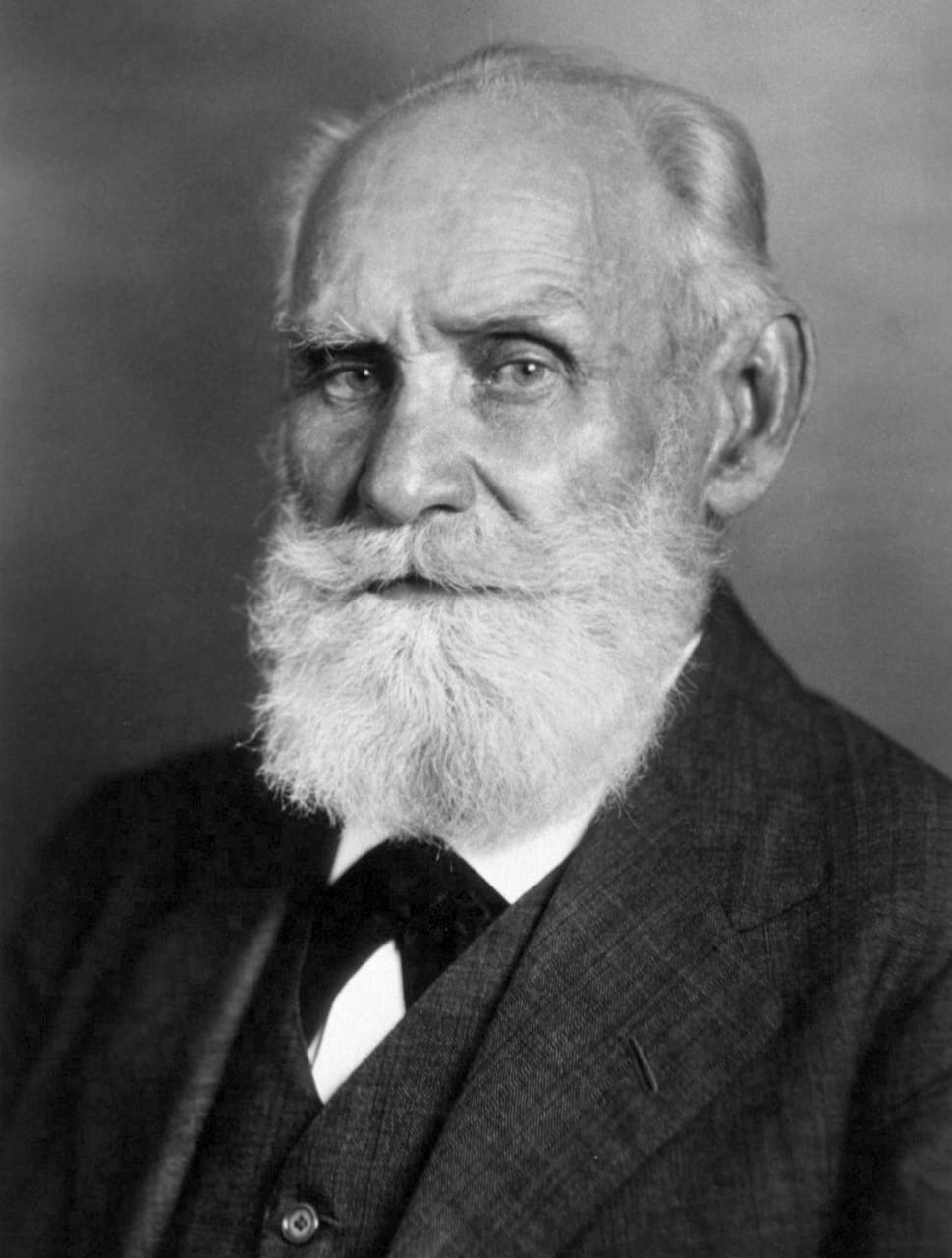
Ivan Petrovich Pavlov was a Russian and Soviet experimental neurologist and physiologist. He is known for his discovery of classical conditioning through his experiments with dogs, and he also conducted significant research on the physiology of digestion, for which he was awarded the Nobel Prize in Physiology or Medicine in 1904.
- born
- 26 September 1849, Ryazan, Russia
- died
- 27 February 1936, St. Petersburg, Russia
- field
- Neurology, Physiology
- nationality
- Russian and Soviet
- known_for
- Discovery of classical conditioning, research on digestion physiology
Verified Timeline
Lore & Background
Pavlov was born on 26 September 1849, the first of ten children, in Ryazan, Russia. His father was a village Russian Orthodox priest, and his mother was a homemaker. As a child, he participated in house duties, loved to garden, ride his bicycle, row, swim, and play gorodki. He could read by age seven but did not begin formal schooling until 11 due to injuries from falling from a high wall onto a stone pavement. Inspired by Dmitry Pisarev and Ivan Sechenov, he abandoned his religious career without graduating and devoted his life to science. In 1870, he enrolled at the University of Saint Petersburg to study natural science. In his fourth year, his first research project on the physiology of the nerves of the pancreas won a prestigious university award. In 1875, he received the degree of Candidate of Natural Sciences. He continued at the Imperial Academy of Medical Surgery, graduating in 1879 with a gold medal. After his doctorate, he studied in Germany from 1884 to 1886 with Carl Ludwig and in the Heidenhain laboratories in Breslau, where he perfected the technique of the exteriorized stomach section, known as the Heidenhain or Pavlov pouch.
Reader's Guide
Pavlov's significance lies in his discovery of classical conditioning through experiments with dogs and his Nobel Prize-winning research on the physiology of digestion. His work transformed knowledge of digestive processes through chronic experiments that kept animals alive, using techniques like the Pavlov pouch and fistulas. He also conducted research on the nervous system and reflex actions. Despite his disapproval of Soviet Communism, he was supported by the Soviet government and praised by Vladimir Lenin. His legacy includes his contributions to physiology and neurology, and his 'Wednesday meetings' where he spoke frankly on many topics, including psychology, until his death in 1936.
Did You Know?
- Pavlov was the first of ten children and could read by age seven, but did not begin formal schooling until he was 11 due to injuries from falling from a high wall onto a stone pavement.
- He abandoned his religious career without graduating from the theological seminary after being inspired by Dmitry Pisarev and Ivan Sechenov.
- Pavlov's first research project, on the physiology of the nerves of the pancreas, won him a prestigious university award in his fourth year at the University of Saint Petersburg.
- He was nominated for the Nobel Prize four times before finally winning in 1904, because earlier nominations were not specific to any single discovery.
- Conscious until his final moments, Pavlov asked a student to sit beside his bed and record the circumstances of his dying to create unique evidence of subjective experiences of the terminal phase of life.
From Priest's Son to Natural Philosopher
Born on 26 September 1849 in Ryazan, Russia, Ivan Pavlov was the first of ten children. His father, Peter Dmitrievich Pavlov, was a village Russian Orthodox priest, and his mother, Varvara Ivanovna Uspenskaya, was a homemaker. As a child, Pavlov willingly participated in house duties such as doing the dishes and taking care of his siblings. He loved to garden, ride his bicycle, row, swim, and play gorodki, devoting his summer vacations to these activities. Although able to read by the age of seven, Pavlov did not begin formal schooling until he was 11 years old, due to serious injuries from falling from a high wall onto a stone pavement. From childhood, he demonstrated intellectual curiosity and what he called 'the instinct for research.' He attended the Ryazan church school before entering the local theological seminary. Inspired by the progressive ideas of Dmitry Pisarev, a Russian literary critic of the 1860s, and Ivan Sechenov, whom Pavlov described as 'the father of physiology,' he abandoned his religious career without graduating and devoted his life to science. In 1870, he enrolled in the physics and mathematics department at the University of Saint Petersburg to study natural science. In his fourth year, his first research project on the physiology of the nerves of the pancreas won him a prestigious university award. In 1875, Pavlov received the degree of Candidate of Natural Sciences.
The Pouch That Changed Digestive Science
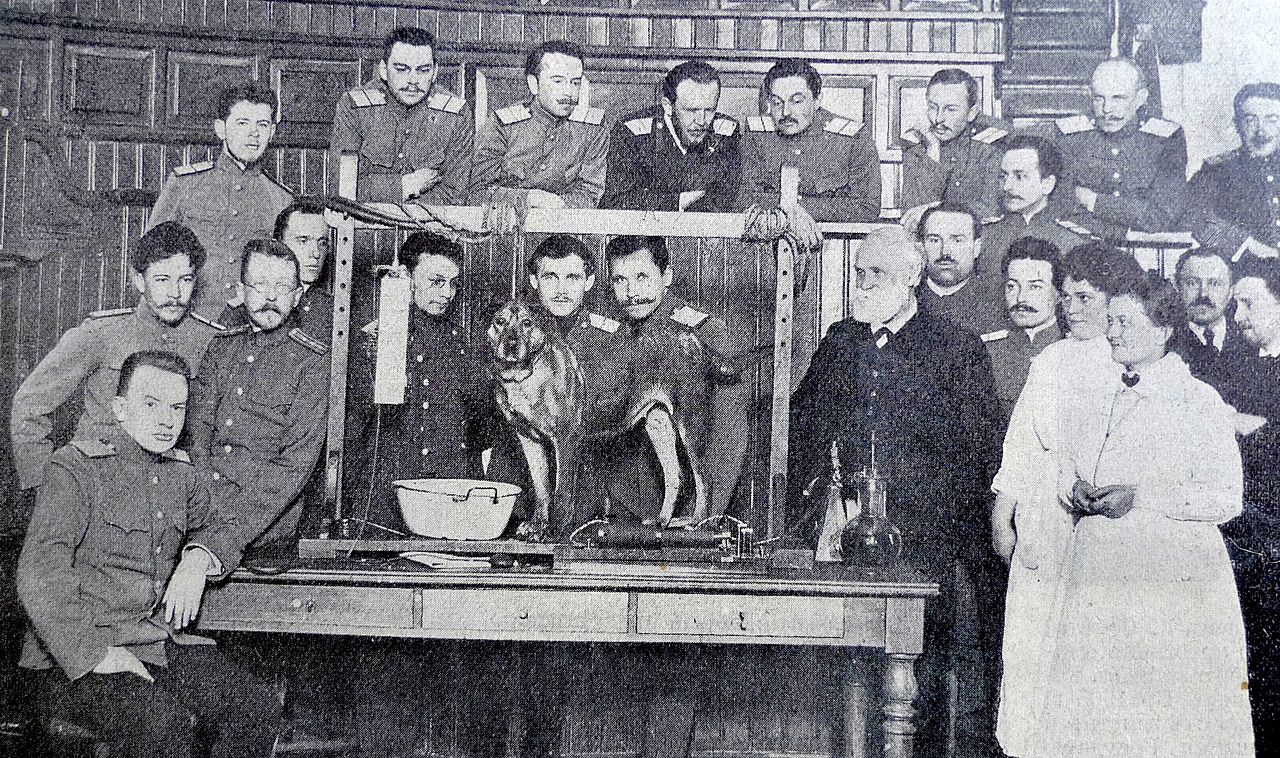
After completing his doctorate, Pavlov went to Germany, where he studied in Leipzig with Carl Ludwig and in the Heidenhain laboratories in Breslau from 1884 to 1886. Heidenhain was studying digestion in dogs using an exteriorized section of the stomach, but the technique had a problem: maintaining the external nerve supply. Pavlov perfected the technique by overcoming this problem. The exteriorized section became known as the Heidenhain or Pavlov pouch. This breakthrough allowed for chronic experiments—studies over time designed to understand normal functions of dogs while keeping them alive and healthy. Previously, experiments had been 'acute,' meaning the dog underwent vivisection which ultimately killed it. Pavlov's approach was revolutionary: he would often remove the esophagus of several dogs and create a fistula in their throats to observe long-term physiological processes. This work laid the foundation for his Nobel Prize-winning research on the physiology of digestion.
The Nobel Prize and the Chronic Dog
Starting in 1901, Pavlov was nominated over four successive years for the Nobel Prize in Physiology or Medicine. He did not win until 1904 because his previous nominations were not specific to any discovery but based on a variety of laboratory findings. When Pavlov received the Nobel Prize, it was specified that he did so 'in recognition of his work on the physiology of digestion, through which knowledge on vital aspects of the subject has been transformed and enlarged.' At the Institute of Experimental Medicine in St. Petersburg, Pavlov carried out his classical experiments on the digestive glands. His laboratory housed a full-scale kennel for experimental canines. Pavlov was interested in observing their long-term physiological processes, which required keeping them alive and healthy to conduct chronic experiments. This was a new kind of study, because previously experiments had been 'acute,' meaning the dog underwent vivisection which ultimately killed it. Pavlov would often remove the esophagus of several dogs and create a fistula in their throats to study normal digestive functions over time.
Building an Institution in St. Petersburg
In 1886, Pavlov returned to Russia to look for a new position. His application for the chair of physiology at the University of Saint Petersburg was rejected. He was offered the chair of pharmacology at Tomsk University in Siberia and at the University of Warsaw in Poland, but he did not take up either post. In 1890, he was appointed professor of Pharmacology at the Military Medical Academy and occupied the position for five years. In 1891, Pavlov was invited to the Institute of Experimental Medicine in St. Petersburg to organize and direct the Department of Physiology. Over a 45-year period under his direction, the institute became one of the most important centers of physiological research in the world. Pavlov continued to direct the Department of Physiology at the institute while taking up the chair of physiology at the Medical Military Academy in 1895. He would head the physiology department at the academy continuously for three decades. His earlier work at the Botkin Clinic produced evidence of a basic pattern in the regulation of reflexes in the activity of circulatory organs, and his 1883 doctor's thesis on 'The centrifugal nerves of the heart' posited the idea of nerves and the basic principles on the trophic function of the nervous system.
Gallery

Frequently Asked Questions
Who is Ivan Pavlov?
Ivan Petrovich Pavlov (1849–1936) was a Russian and Soviet scientist specializing in neurology and physiology. He is widely regarded as one of the foundational figures in behavioral psychology because of his pioneering work on how organisms learn through association.
What is Pavlov's most famous contribution?
He identified classical conditioning by demonstrating that dogs could be trained to salivate at the sound of a tone once it was repeatedly paired with food. This insight became a cornerstone of behaviorist psychology and shaped decades of educational research on habit formation.
Did Pavlov win a Nobel Prize, and for what?
Yes, in 1904 he was awarded the Nobel Prize in Physiology or Medicine. The honor recognized his earlier, meticulous research on how the digestive system functions, rather than the conditioning experiments he later became famous for.
What kind of experiments is Pavlov best known for?
His most iconic studies involved dogs, where he carefully measured salivation responses to map how the nervous system forms conditioned reflexes. He also performed extensive surgical preparations to observe gastric secretions in living animals, which underpinned his digestion research.
Why does Pavlov matter to fans of psychology and education theory?
His conditioning framework gave psychologists and educators a concrete, observable model for how repeated pairings of stimuli shape behavior. That idea rippled outward into behaviorist classroom techniques, animal training methods, and modern learning theory, making him a bridge between pure physiology and applied behavioral science.
More in Psychologists And Education Theorists 25-30
Elsewhere in the Psychologists And Education Theorists universe
Spotted an error? Know more?
This is a living reference — every entry is fact-audited, and reader corrections feed straight into our audit queue. Suggest an edit · See this site's audit record