
Jean Piaget
Swiss psychologist who pioneered the study of child cognitive development.

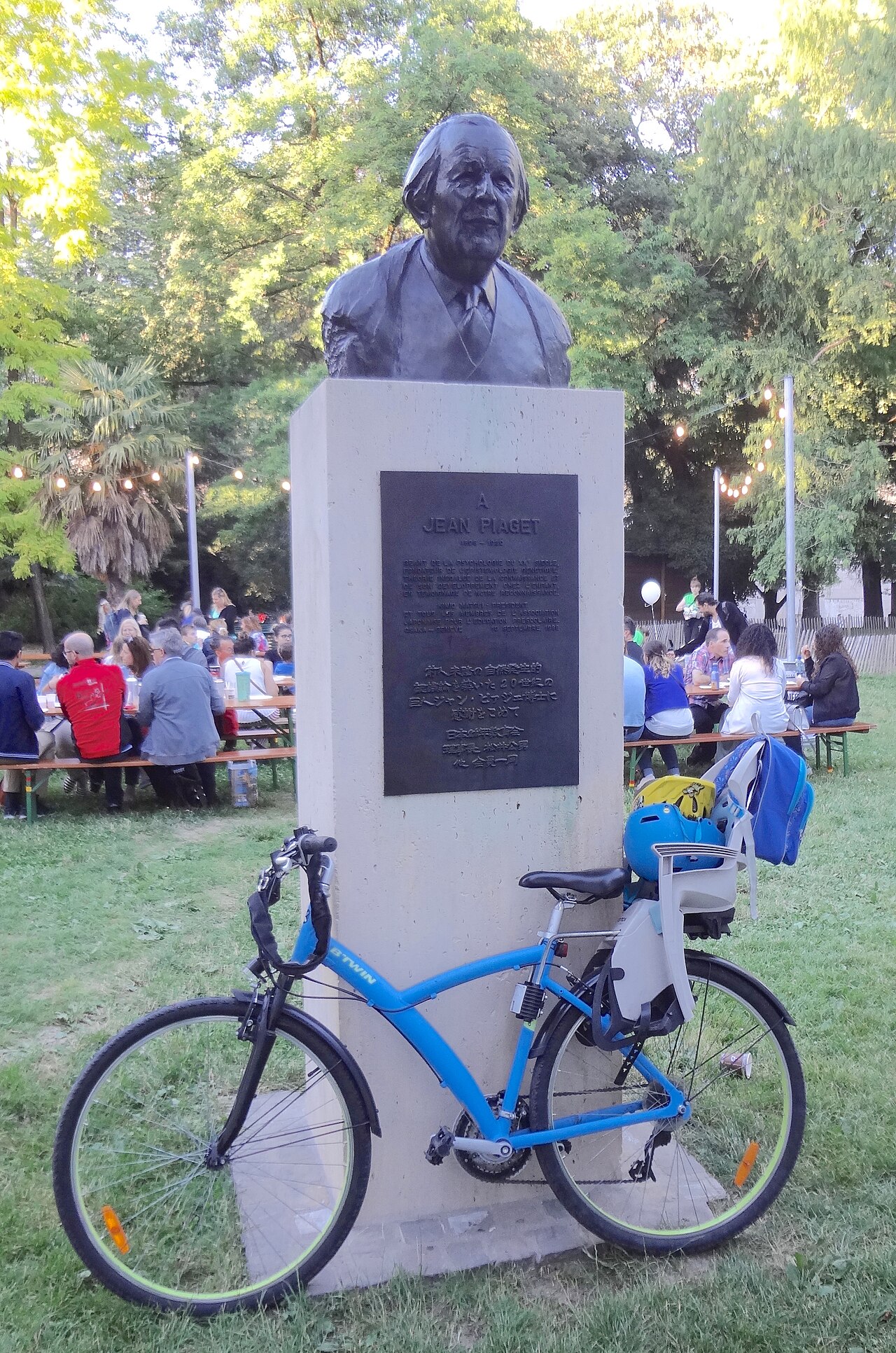
MHM55 · CC BY-SA 4.0
Jean William Fritz Piaget was a Swiss psychologist known for his work on child development. His theory of cognitive development and epistemological view are together called genetic epistemology. He placed great importance on the education of children and served as Director of the International Bureau of Education.
- born
- 9 August 1896
- died
- 16 September 1980
- field
- Psychology
- nationality
- Swiss
- known_for
- Theory of cognitive development and genetic epistemology
Verified Timeline
Lore & Background
Piaget was born in 1896 in Neuchâtel, Switzerland, the oldest son of Arthur Piaget, a professor of medieval literature, and Rebecca Jackson. He was a precocious child who developed an interest in biology and zoology, publishing several articles on mollusks by age 15. At 15, he learned that a memory of a kidnapping incident from his infancy was false, which fascinated him. He studied at the University of Neuchâtel and briefly at the University of Zürich, publishing two philosophical papers he later dismissed as adolescent thought. After graduation, Piaget moved to Paris and taught at the Grange-Aux-Belles Street School for Boys, run by Alfred Binet. While marking Binet's intelligence tests, he noticed young children consistently gave wrong answers in ways older children did not, leading him to theorize that children's cognitive processes are inherently different from adults'. In 1921, he returned to Switzerland as director of the Rousseau Institute in Geneva. He married Valentine Châtenay in 1923, and they had three children, whom he studied from infancy. Piaget created the International Center for Genetic Epistemology in Geneva in 1955 while on the faculty of the University of Geneva, directing it until his death in 1980. The center's collaborations led it to be called "Piaget's factory" in scholarly literature. He died on 16 September 1980 and was buried in the Cimetière des Rois in Geneva's Plainpalais district, as he had requested, in an unmarked grave with his family.
Reader's Guide
Piaget's significance lies in his foundational work on child development, particularly his theory of cognitive development and genetic epistemology. His observation that young children's cognitive processes differ inherently from adults' led to a global theory of cognitive developmental stages. He declared in 1934 that "only education is capable of saving our societies from possible collapse," reflecting his emphasis on education. His theory has been studied in pre-service education programs, and constructivist-based strategies persist in early childhood education. According to Ernst von Glasersfeld, Piaget was "the great pioneer of the constructivist theory of knowing." His ideas were widely popularized in the 1960s, leading to the emergence of development as a major sub-discipline in psychology. By the end of the 20th century, he was second only to B. F. Skinner as the most-cited psychologist. His theoretical research program included four phases: the sociological model, the biological model, the logical model, and the study of figurative thought, with some scholars calling for a "zeroth Piaget" phase before his turn to psychology.
Did You Know?
- By age 15, Piaget had already published several articles on mollusks, earning a reputation among working biologists.
- As a teenager, Piaget discovered that a vivid memory he held of a kidnapping attempt from infancy was entirely false—his nanny had fabricated the story.
- Piaget's insight that children's wrong answers on intelligence tests followed consistent patterns led him to propose that children's cognitive processes are inherently different from adults'.
- The International Center for Genetic Epistemology, which Piaget founded in 1955, was nicknamed "Piaget's factory" in scholarly literature due to its prolific collaborations.
- Piaget was buried in an unmarked grave at the Cimetière des Rois in Geneva's Plainpalais district, as he had requested.
A Child Who Outgrew His Own Mind
Piaget was born in 1896 in Neuchâtel, a Francophone corner of Switzerland, the eldest son of Arthur Piaget, a professor of medieval literature at the local university, and Rebecca Jackson, who came from a distinguished French family of steel foundry owners. From an early age, the boy showed an unusual hunger for the natural world. His fascination with zoology was so intense that by fifteen he had already published several articles on mollusks, earning recognition among working biologists. Equally striking was a personal episode that would later echo through his theoretical work: his former nanny wrote to his parents to apologize for having once fabricated a story about fending off a kidnapper from baby Jean's pram. No such kidnapper existed, yet Piaget had retained a vivid memory of the event even after learning it was false. This early encounter with the construction of memory foreshadowed his lifelong preoccupation with how the mind builds knowledge. His godfather further steered him toward philosophy and logic, planting the seeds of what would become his epistemological framework.
The Mistake That Built a Theory
After graduating, Piaget relocated to Paris and took a teaching position at the Grange-Aux-Belles Street School for Boys, an institution run by Alfred Binet, the creator of the famous intelligence test later revised into the Stanford-Binet scales. Piaget's day-to-day task involved assisting with the marking of these tests, and it was during this routine work that a transformative observation struck him. Young children were not merely getting questions wrong; they were doing so in remarkably consistent, patterned ways that older children and adults simply did not replicate. Rather than dismissing these errors as mere ignorance, Piaget recognized them as evidence of fundamentally different cognitive architecture. This single insight—that a child's mind operates under its own internal logic rather than as a diminished version of an adult's—became the foundation for his sweeping theory of cognitive developmental stages, in which individuals pass through common patterns of thought at each period of growth. The observation emerged not from a grand experiment but from the quiet, unglamorous act of scoring test papers.
Building Institutions, Shaping Policy
Piaget's career was as much about building institutions as it was about publishing theories. In 1921 he returned to Geneva to take the helm of the Rousseau Institute, where he encountered Édouard Claparède's ideas, including the concept of mental "groping" tied to trial-and-error patterns. He went on to hold a professorship at the University of Neuchâtel from 1925 to 1929, teaching across psychology, sociology, and the philosophy of science. In 1929 he assumed the directorship of the International Bureau of Education, a role he held until 1968, during which he drafted annual "Director's Speeches" for the IBE Council and the International Conference on Public Education. In 1934 he issued a declaration that only education could save societies from collapse, whether violent or gradual. In 1955, while on the faculty of the University of Geneva, he founded the International Center for Genetic Epistemology and directed it until his death in 1980. The center's extraordinary web of collaborations earned it the nickname "Piaget's factory" in scholarly literature. He also served as chief consultant at conferences at Cornell University (11–13 March) and the University of California, Berkeley (16–18 March) in 1964, linking cognitive research to curriculum design.
A Legacy That Outlived Its Author
Ernst von Glasersfeld, a fellow constructivist, called Piaget "the great pioneer of the constructivist theory of knowing," and by the close of the twentieth century the Swiss thinker ranked second only to B. F. Skinner as the most-cited psychologist in the field. His ideas, which gained widespread popular traction in the 1960s, helped elevate the study of human development into a major sub-discipline of psychology. In classrooms today, educators and theorists in early childhood education continue to weave constructivist-based strategies into their practice, and his developmental framework remains a staple of pre-service teacher training programs. Even his theoretical architecture has attracted ongoing scholarly debate: Harry Beilin parsed Piaget's research program into four distinct phases—sociological, biological, logical, and figurative—arguing they represent almost different "Piagets," while Jeremy Burman proposed adding a "zeroth Piaget" to account for his pre-psychological work. Piaget himself died on 16 September 1980 and, per his own wish, was interred in an unmarked family grave at the Cimetière des Rois in Geneva's Plainpalais district, a quiet ending for a mind that reshaped how the world understands the growing child.
Gallery
Frequently Asked Questions
Who is Jean Piaget?
Jean Piaget was a Swiss psychologist born on 9 August 1896 who devoted his career to understanding how children's thinking evolves. He is widely regarded as a foundational figure in developmental psychology and education theory.
What is Jean Piaget's theory of cognitive development?
Piaget proposed that children move through a sequence of distinct mental stages, each one building on the previous as their ability to reason and make sense of the world expands. This framework became a cornerstone for how educators and psychologists approach learning in young minds.
What is genetic epistemology?
Genetic epistemology is the label Piaget gave to his integrated study of how knowledge is constructed and how it transforms across a person's lifespan. Rather than treating knowledge as a static set of facts, he traced its gradual evolution from infancy through adulthood.
What role did Jean Piaget play in education?
Beyond his laboratory research, Piaget served as Director of the International Bureau of Education, where he pushed for teaching methods aligned with children's developmental stages. He championed the idea that education should actively engage young learners rather than simply transmit information.
When did Jean Piaget die and what legacy did he leave?
Jean Piaget passed away on 16 September 1980. His work on child cognition and genetic epistemology continues to influence psychology, pedagogy, and the philosophy of knowledge well into the twenty-first century.
More in Psychologists And Education Theorists 25-30
Elsewhere in the Psychologists And Education Theorists universe
Spotted an error? Know more?
This is a living reference — every entry is fact-audited, and reader corrections feed straight into our audit queue. Suggest an edit · See this site's audit record