
John Dewey
American philosopher, psychologist, and educational reformer.

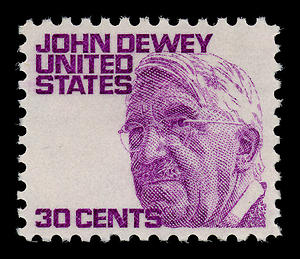
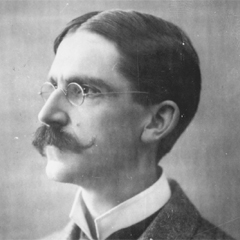
John Dewey · Public domain
John Dewey (October 20, 1859 – June 1, 1952) was an American philosopher, psychologist, and educational reformer. He was one of the most prominent American scholars in the first half of the twentieth century. The overriding theme of his works was his profound belief in democracy, be it in politics, education, or communication and journalism. He was a primary figure associated with pragmatism and is considered one of the founding thinkers of functional psychology.
- born
- October 20, 1859
- died
- June 1, 1952
- field
- Philosophy, psychology, educational reform
- nationality
- American
- known_for
- Pragmatism, functional psychology, progressive education
Verified Timeline
Lore & Background
John Dewey was born in Burlington, Vermont, to a family of modest means. He was one of four boys born to Archibald Sprague Dewey and Lucina Artemisia Rich Dewey. Their first son, also named John, died in an accident on January 17, 1859; the second John Dewey was born October 20, 1859, forty weeks after the death of his older brother. He attended the University of Vermont, where he was initiated into Delta Psi and graduated Phi Beta Kappa in 1879. After two years as a high-school teacher in Oil City, Pennsylvania, and one year as an elementary school teacher in Charlotte, Vermont, Dewey decided he was unsuited for teaching primary or secondary school. He received his Ph.D. from the School of Arts & Sciences at Johns Hopkins University in 1884, with an unpublished and now lost dissertation titled 'The Psychology of Kant.' He then accepted a faculty position at the University of Michigan (1884–88 and 1889–94), later joining the newly founded University of Chicago in 1894, where he developed his belief in Rational Empiricism and founded the University of Chicago Laboratory Schools. From 1904 until his retirement in 1930, he was professor of philosophy at Teachers College, Columbia University, and influenced Carl Rogers. He was a longtime member of the American Federation of Teachers and, along with historians Charles A. Beard and James Harvey Robinson and economist Thorstein Veblen, one of the founders of The New School.
Reader's Guide
John Dewey's significance lies in his wide-ranging influence on philosophy, psychology, and education. He was a primary figure in pragmatism and a founding thinker of functional psychology, with his 1896 paper 'The Reflex Arc Concept in Psychology' regarded as the first major work in the Chicago functionalist school of psychology. A 2002 survey by A Review of General Psychology ranked him as the 93rd-most-cited psychologist of the 20th century. As an educational reformer, he was a major voice of progressive education, applying his ideas at the University of Chicago Laboratory Schools, which provided material for his first major work on education, The School and Society (1899). His most significant writings include Democracy and Education (1916), Experience and Nature (1925), and Art as Experience (1934), addressing topics from epistemology to aesthetics. Dewey stated in 1888, 'Democracy and the one, ultimate, ethical ideal of humanity are to my mind synonymous.' He asserted that complete democracy required not just extending voting rights but also a fully formed public opinion accomplished through communication among citizens, experts, and politicians. He was elected president of the American Psychological Association in 1899 and president of the American Philosophical Association in 1905. His influence was such that Hilda Neatby wrote, 'Dewey has been to our age what Aristotle was to the later Middle Ages, not a philosopher, but the philosopher.'
Did You Know?
- Dewey's older brother, also named John, died in an accident on January 17, 1859; Dewey was born forty weeks later on October 20, 1859.
- His unpublished and now lost Ph.D. dissertation was titled 'The Psychology of Kant' and criticized Kant from an idealist position.
- A 2002 survey ranked Dewey as the 93rd-most-cited psychologist of the 20th century.
- During his two-year visit to China (1919–1921), Dewey gave nearly 200 lectures and was hailed as 'the American Confucius.'
- Dewey's 1919 lecture on 'Three Contemporary Philosophers: Bertrand Russell, Henri Bergson and William James' at Peking University was attended by a young Mao Zedong.
The Long Road from Vermont to Columbia
John Dewey's academic path was anything but linear. Born in Burlington, Vermont, in 1859 to a family of modest means, he was the second of four boys; his elder brother, also named John, had died in an accident on January 17, 1859, and Dewey was born forty weeks later. After graduating Phi Beta Kappa from the University of Vermont in 1879, he studied privately with Henry Augustus Pearson Torrey before earning his doctorate at Johns Hopkins University in 1884, where he worked with George Sylvester Morris, Charles Sanders Peirce, Herbert Baxter Adams, and G. Stanley Hall. His unpublished and now lost dissertation, titled 'The Psychology of Kant,' criticized Immanuel Kant from an idealist position. Before settling into academia, Dewey spent two years teaching high school in Oil City, Pennsylvania, and a year in an elementary classroom in Charlotte, Vermont, experiences that convinced him he was unsuited for teaching primary or secondary school. He then held faculty positions at the University of Michigan (1884–88 and 1889–94), the newly founded University of Chicago (1894–1904), and finally Teachers College at Columbia University, where he remained from 1904 until his retirement in 1930. Over his career he published more than 700 articles in 140 journals and approximately 40 books, and he co-founded The New School alongside historians Charles A. Beard and James Harvey Robinson and economist Thorstein Veblen.
Pragmatism and the Birth of Functional Psychology
Dewey's intellectual fingerprint on American thought is inseparable from two intertwined movements: pragmatism and functional psychology. At the University of Chicago in the 1890s, he developed his belief in Rational Empiricism, becoming associated with the newly emerging Pragmatic philosophy. His 1896 paper, 'The Reflex Arc Concept in Psychology,' challenged the standard psychological concept of the reflex arc and is regarded as the first major work in the Chicago functionalist school of psychology. A 2002 survey by A Review of General Psychology ranked him as the 93rd-most-cited psychologist of the 20th century. Beyond psychology, his philosophical output spanned epistemology, metaphysics, aesthetics, art, logic, social theory, and ethics. Works like Experience and Nature (1925)—which Dewey called his most 'metaphysical' statement—and Logic: The Theory of Inquiry (1938) reveal a thinker who refused to compartmentalize inquiry. In the preface to the second edition of Experience and Nature (1929), Dewey stated, 'I have not striven in this volume for a reconciliation between the new and the old,' and described a process of producing 'a change in the significations previously attached to' the words 'experience' and 'nature.'
The Laboratory School and Progressive Pedagogy
Perhaps no dimension of Dewey's career illustrates his conviction that theory must be tested in practice more vividly than his work in education. While a professor at the University of Chicago, he initiated the University of Chicago Laboratory Schools, where he was able to apply and test his progressive ideas on pedagogical method. The experience directly fed into The School and Society (1899), his first major work on education, and later into the landmark Democracy and Education (1916), his celebrated work on progressive education. Dewey championed the notion that schools should cultivate experimental intelligence and plurality. His influence radiated far beyond the classroom: he is credited with influencing Carl Rogers, and he maintained a lifelong membership in the American Federation of Teachers. Disagreements with the administration at the University of Chicago ultimately caused his resignation in 1904, after which he moved to Teachers College at Columbia University, where he continued to advocate for a liberal, democratic approach to learning until his retirement in 1930.
Democracy as the Overarching Ethical Ideal
For Dewey, democracy was never confined to ballot boxes or legislative chambers; it was, in his own 1888 words while still at the University of Michigan, 'Democracy and the one, ultimate, ethical ideal of humanity are to my mind synonymous.' He believed that a truly democratic society required two fundamental elements—schools and civil society—to be reconstructed to encourage experimental intelligence and plurality. Extending voting rights alone, he argued, was insufficient. What was needed was a fully formed public opinion, sustained through communication among citizens, experts, and politicians. This conviction animated some of his most consequential political writings. The Public and its Problems (1927) was a direct response to Walter Lippmann's The Phantom Public (1925), defending the capacity of citizens to deliberate and govern. Freedom and Culture (1939) examined the cultural and psychological roots of fascism. Even his 1929 travelogue, Impressions of Soviet Russia and the Revolutionary World, reflected his restless search for models of collective life. Across politics, journalism, and education, Dewey held that democracy was an ongoing experiment in shared intelligence, not a fixed institutional arrangement.
Gallery

Frequently Asked Questions
Who is John Dewey?
He was an American philosopher, psychologist, and educational reformer born in 1859 who rose to become one of the most prominent scholars of early twentieth-century America.
What is John Dewey best known for?
He is widely recognized for championing pragmatism in philosophy, developing ideas in functional psychology, and advocating for progressive, experience-based education.
What was John Dewey's approach to education?
He believed students learn best through active, hands-on experience within a democratic classroom rather than through passive memorization of fixed curricula.
Why is John Dewey important to fans of psychology and education?
His work reshaped how both fields understand the connection between thinking and doing, and his democratic ideals continue to influence how schools are structured today.
What years did John Dewey live?
He was born on October 20, 1859, and died on June 1, 1952, giving him a remarkably long career that spanned much of the twentieth century.
More in Psychologists And Education Theorists 25-30
Elsewhere in the Psychologists And Education Theorists universe
Spotted an error? Know more?
This is a living reference — every entry is fact-audited, and reader corrections feed straight into our audit queue. Suggest an edit · See this site's audit record