
Alfred Binet
Co-creator of the first practical intelligence test.

via Wikipedia: Alfred Binet · see source
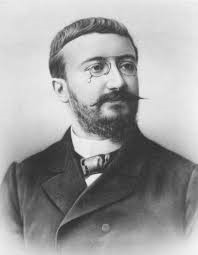
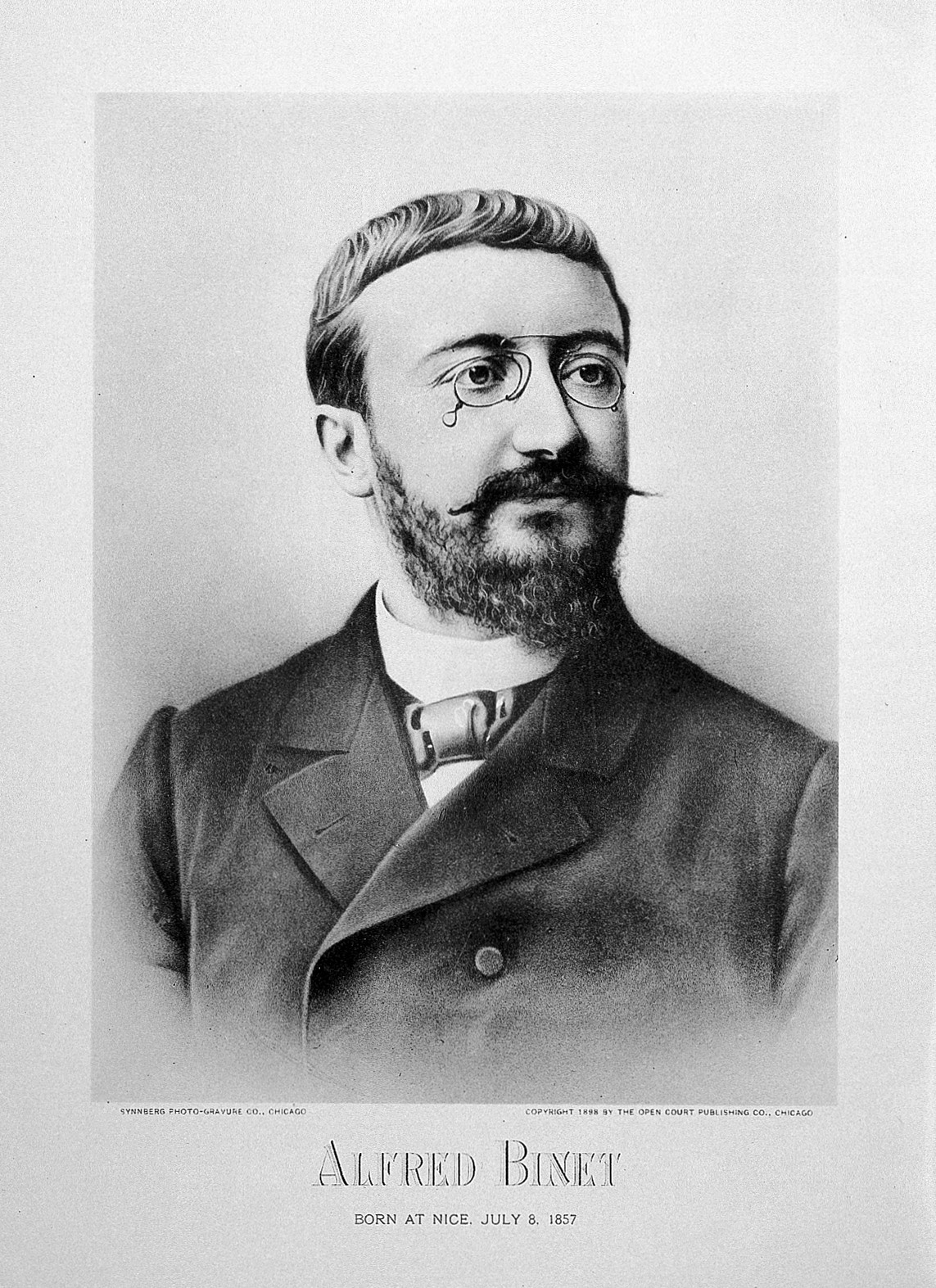
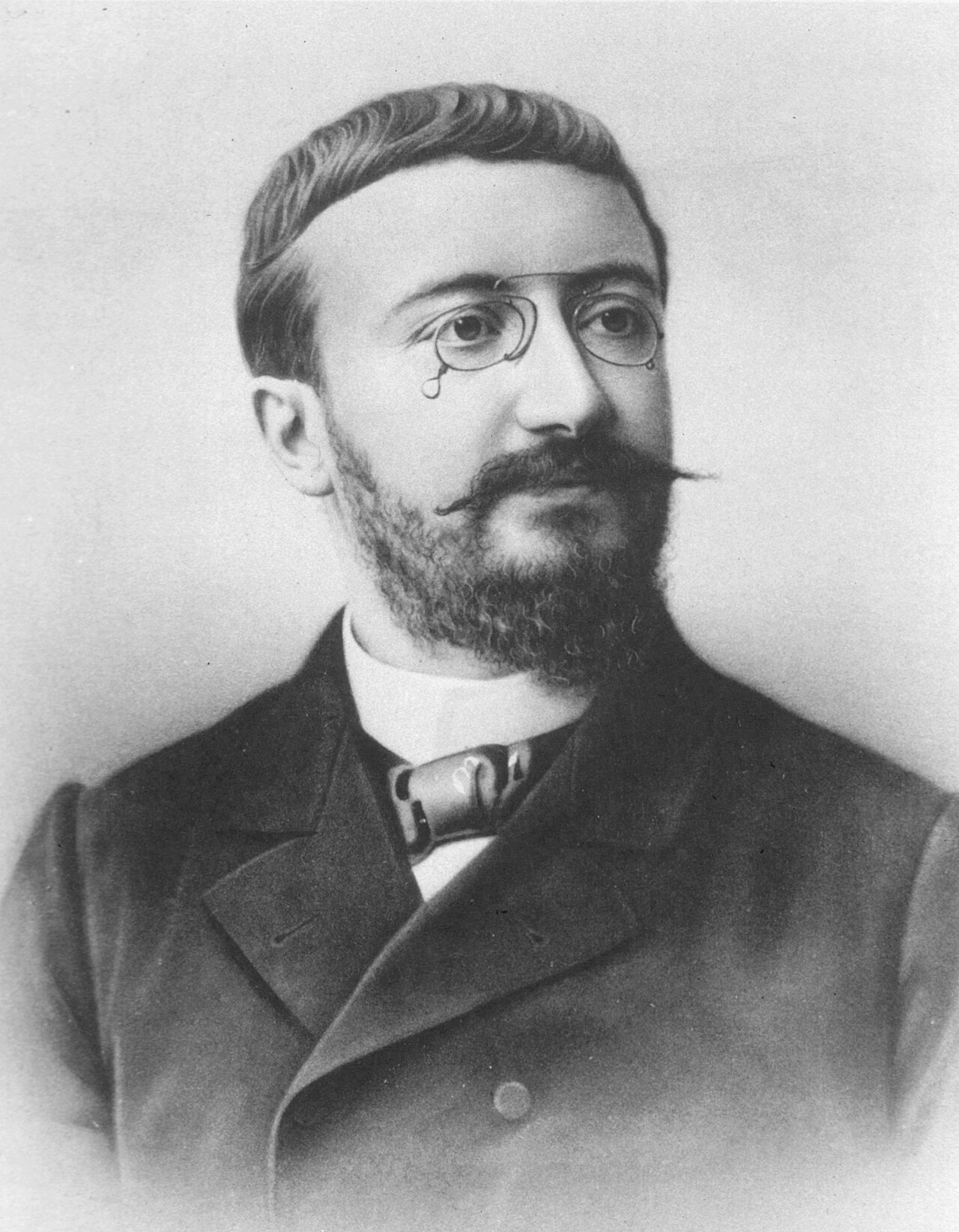
Alfred Binet was a French psychologist who, together with Théodore Simon, invented the first practical intelligence test, the Binet–Simon Intelligence Test. His work emerged from a debate in France over how to identify and educate children with learning difficulties, leading to a test based on objective evidence rather than medical examination alone.
- born
- 8 July 1857
- died
- 18 October 1911
- field
- Psychology
- nationality
- French
- known_for
- Co-inventor of the Binet–Simon Intelligence Test
Verified Timeline
Lore & Background
Alfred Binet was born as Alfredo Binetti in Nice, then part of the Kingdom of Sardinia, before its annexation by France. He studied law in Paris and physiology at the Sorbonne, then worked as a researcher at the Salpêtrière Hospital under Jean-Martin Charcot, experimenting with hypnotism. After a public admission that his conclusions in that area were wrong, he resigned in 1890 and turned to studying child development, influenced by his two daughters, Marguerite and Alice. He later became director of the Laboratory of Experimental Psychology at the Sorbonne and co-founded the French journal L'Année Psychologique. In 1899, Binet joined the Free Society for the Psychological Study of the Child, which opposed proposals by psychiatrist Désiré-Magloire Bourneville to send children with learning difficulties to boarding schools attached to asylums. Binet argued that objective criteria should determine a child's educational placement, not a psychiatrist's medical examination. With Théodore Simon, he developed a series of tasks to distinguish children who needed help from those who did not, publishing a preliminary version in 1905 and the full Binet–Simon scale in 1908, with a modest revision in 1911 shortly before his death.
Reader's Guide
Alfred Binet's significance lies in his creation of the first practical intelligence test, which shifted the assessment of intellectual ability from subjective medical judgment to objective, task-based measurement. Working with Théodore Simon, Binet designed a scale of thirty tasks of increasing difficulty, tested on children of different ages with input from school teachers. This test directly addressed a pressing educational debate in France: whether children with learning difficulties should be sent to asylums or educated in regular schools, and who should decide. Binet's insistence on objective evidence laid the foundation for modern intelligence testing. His earlier work on hypnotism, though later discredited, established his international reputation. After his death, his test was revised and adapted by others, becoming the basis for many later IQ tests. Binet's research with his own children also contributed to developmental psychology, and his work may have influenced Jean Piaget, who later studied with Simon. Despite publishing over 200 books and articles, Binet is remembered primarily for the intelligence scale, possibly because he lacked a major university affiliation that would have perpetuated his broader research.
Did You Know?
- Alfred Binet was born Alfredo Binetti in Nice, then part of the Kingdom of Sardinia, before its annexation by France in 1860.
- Binet studied law in Paris and received his degree in 1878, then studied physiology at the Sorbonne.
- He worked at the Salpêtrière Hospital under Jean-Martin Charcot, experimenting with hypnotism, but later publicly admitted his conclusions were wrong and resigned in 1890.
- Binet co-founded the French journal L'Année Psychologique, the first scientific journal in psychology in France.
- The Binet–Simon scale consisted of thirty tasks of increasing difficulty, with the hardest including repeating 7 random digits and finding three rhymes for the French word 'obéissance'.
A Child Among Mollusks
Born in 1896 in Neuchâtel, in the French-speaking part of Switzerland, Jean Piaget was the eldest son of a medieval literature professor and a woman from a prominent French steel-industrial family. His curiosity was directed early toward the natural world. By fifteen, he had published several articles on mollusks, earning recognition within the zoological community for a boy who had not yet finished secondary school. A godfather nudged him toward philosophy and logic, and his university years at Neuchâtel and a brief period in Zürich yielded two philosophical papers he later dismissed as adolescent work. A peculiar episode from infancy also left its mark: his former nanny wrote to his parents to apologize for a fabricated tale about repelling a kidnapper from his baby carriage. Piaget was fascinated not by the lie but by the fact that he had retained a vivid memory of an event that never happened. This early encounter with the construction of memory foreshadowed a lifetime of inquiry into how the mind builds its understanding of the world.
The Mistakes That Changed Everything
After graduating, Piaget moved to Paris and took a teaching post at the Grange-Aux-Belles Street School for Boys, an institution run by Alfred Binet, the creator of the Binet-Simon intelligence test. Piaget's role there was modest: he helped mark the tests. But while grading, he noticed something that reframed his entire career. Young children did not merely get questions wrong; they consistently produced the same types of errors that older children and adults never made. Rather than treating these as simple failures, Piaget saw them as evidence of a fundamentally different cognitive architecture. The young mind was not a smaller, less capable version of the adult mind. It operated by different rules. This insight became the seed of his global theory of cognitive developmental stages, in which individuals pass through common patterns of thought at each period of growth. A boy's systematic mistakes in a Parisian classroom had, in effect, launched a new science of how the mind develops.
Building Institutions, Raising Children
Piaget's career was as much about building institutions as about publishing theories. In 1921 he returned to Geneva to take the helm of the Rousseau Institute, working alongside Édouard Claparède, whose ideas about mental groping and trial-and-error resonated with his own thinking. Two years later he married Valentine Châtenay, and the couple had three children whom Piaget observed and studied from infancy, turning his own family into a living laboratory. From 1925 to 1929 he held a professorship at the University of Neuchâtel covering psychology, sociology, and the philosophy of science. In 1929 he accepted the directorship of the International Bureau of Education, a role he held until 1968, during which he drafted annual addresses to the IBE Council articulating his educational convictions. In 1955, while on the faculty at the University of Geneva, he founded the International Center for Genetic Epistemology and led it until his death. The center generated so many collaborations that scholars nicknamed it Piaget's factory.
The Most-Cited Mind
Piaget's influence on twentieth-century thought is difficult to overstate. Ernst von Glasersfeld identified him as the great pioneer of the constructivist theory of knowing, and his ideas, widely popularized in the 1960s, helped elevate the study of cognitive development into a major sub-discipline of psychology. By the century's close, he ranked second only to B. F. Skinner as the most-cited psychologist in the field. His educational philosophy left a lasting imprint as well: in 1934, as head of the International Bureau of Education, he declared that only education could save societies from collapse, whether violent or gradual. Today, constructivist strategies rooted in his work remain embedded in pre-service teacher training and early childhood pedagogy. His theoretical program, described by Harry Beilin as moving through four distinct phases, was so varied that scholars have spoken of multiple Piagets, while Jeremy Burman added a zeroth phase before his turn to psychology. He died in September 1980 and was buried, as he wished, in an unmarked family grave in the Cimetière des Rois in Plainpalais, Geneva.
Gallery
Frequently Asked Questions
Who is Alfred Binet?
Alfred Binet was a French psychologist born on 8 July 1857 who is best remembered for co-creating the first practical intelligence test. He developed this tool alongside Théodore Simon, and their collaboration produced what became known as the Binet–Simon Intelligence Test.
What is Alfred Binet most famous for?
He is widely recognized as the co-inventor of the Binet–Simon Intelligence Test, the first practical instrument designed to gauge a child's cognitive abilities in a standardized way. That achievement laid the conceptual groundwork for virtually every modern IQ assessment that followed.
How did the Binet–Simon test come to be?
The test grew out of a French policy debate about how best to identify and support children who struggled in school. Rather than relying solely on medical examinations, Binet and Simon built an assessment grounded in objective, observable evidence of a child's reasoning and problem-solving skills.
When was Alfred Binet born and when did he die?
Binet was born on 8 July 1857 in France and passed away on 18 October 1911. His active career in psychology spanned the late nineteenth and early twentieth centuries.
Why does Alfred Binet matter to psychologists and educators?
His work shifted the way schools and clinics evaluated children, moving the conversation away from purely medical diagnoses toward measurable cognitive performance. That shift made it possible to design targeted educational interventions, a practice that remains central to special education today.
More in Psychologists And Education Theorists 1-24
Elsewhere in the Psychologists And Education Theorists universe
Spotted an error? Know more?
This is a living reference — every entry is fact-audited, and reader corrections feed straight into our audit queue. Suggest an edit · See this site's audit record